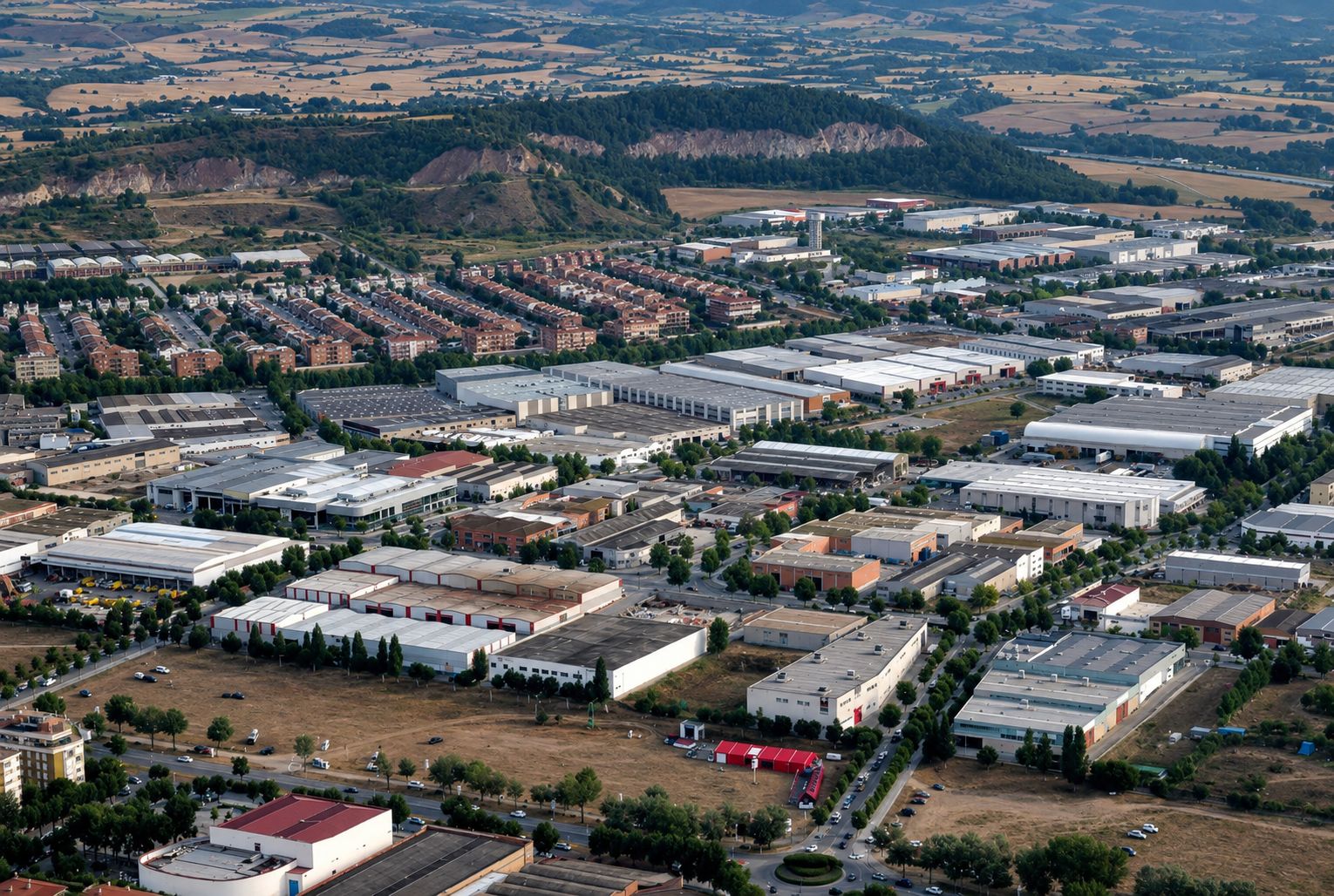
Aerial view of an industrial estate
Energy communities

Local Energy Communities (LEC)

Feasibility, governance, design, funding and commissioning of local and municipal energy communities.

Contact us
Our services

What we do

We offer engineering and consulting services specialising in Local Energy Communities (LEC) and Municipal Energy Communities (MEC), supporting public administrations, companies, cooperatives and organisations that want to promote a more sustainable, efficient and participatory energy model.

  • Technical, economic and energy feasibility studies to assess the potential for creating and developing energy communities.
  • Detailed design of shared self-consumption, renewable generation, energy storage and other associated infrastructure.
  • Site supervision and execution, ensuring correct implementation of the installations and compliance with technical, regulatory and quality requirements.
  • Health and Safety Coordination (CSS) during the works, ensuring compliance with current occupational risk prevention legislation.
  • Technical advice and management support at every stage of the project, from initial definition to commissioning of the installations.
  • Support with administrative procedures, permits, legalisation and management of grants and subsidies for energy transition projects.

Our goal is to facilitate the creation of viable, efficient energy communities adapted to each area, contributing to decarbonisation, the optimisation of energy resources and the active participation of citizens in the new energy model.

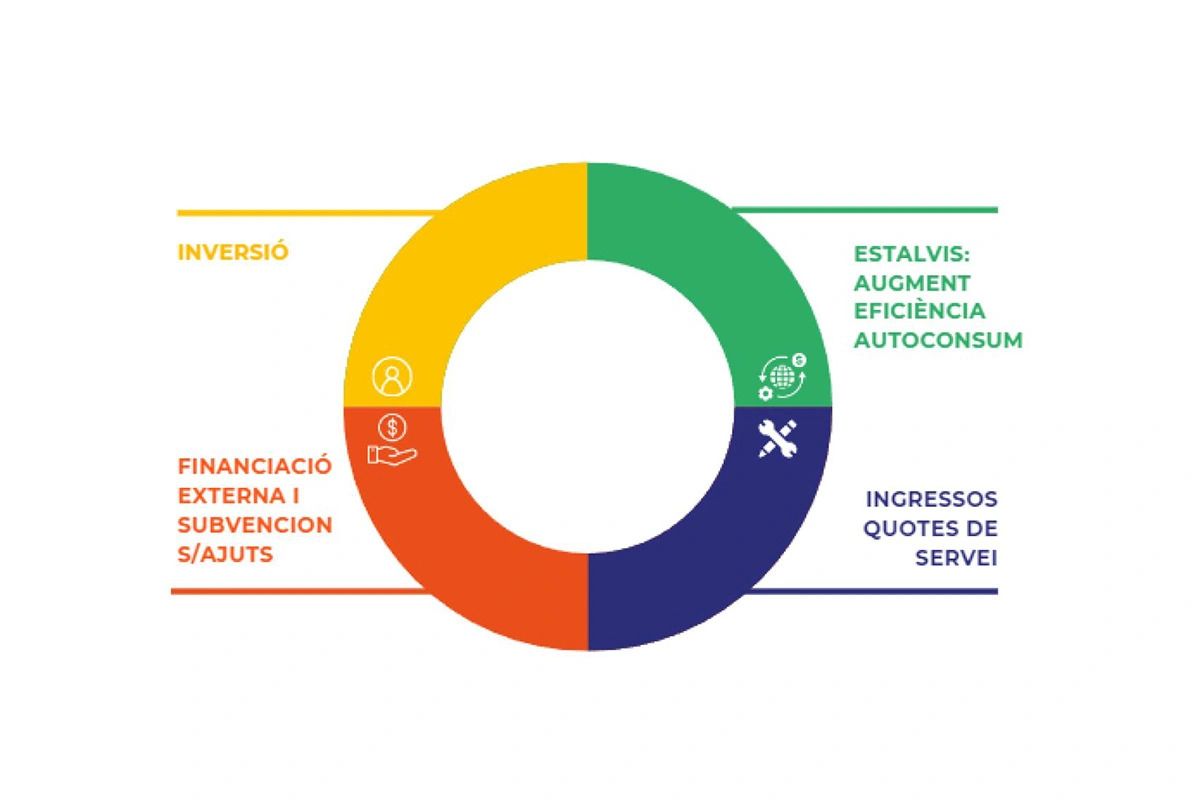
Diagram of an energy community's economic model: investment, savings, revenue and funding
Background

What is an energy community?

Energy Communities are an energy management model based on the active participation of citizens, public administrations, businesses and other local stakeholders in the production, management, distribution and consumption of renewable energy. Driven by the European and Spanish regulatory framework, they are a strategic tool to accelerate the energy transition, support decarbonisation and foster more sustainable, resilient and participatory local development.

An energy community is a legal entity based on open and voluntary participation, with democratic governance, that brings together local stakeholders to produce, share and manage renewable energy. Its aim is to generate environmental, social and economic benefits through shared self-consumption, renewable generation, storage, energy efficiency, electric mobility and other energy services.

For local councils, energy communities are an opportunity to lead the municipality's energy transition, encourage citizen participation and reduce energy dependence. Achieving this requires rigorous technical planning to ensure the project's feasibility, from initial analysis and sizing of the installations to construction and start-up.

Funding

Financial support

Next Generation EU

A strategic funding opportunity for innovation, digitalisation, sustainability and competitiveness projects. Non-repayable grants and other financial instruments reduce the initial investment and accelerate energy efficiency and circular economy projects.

Spanish Recovery Plan (PRTR)

Channels Next Generation EU funds in Spain through programmes such as the PERTE, ICO credit lines and CDTI grants, which help finance innovation, sustainability and growth projects.

Government of Catalonia

Through Next Generation EU funds and agencies such as ACCIÓ, it promotes grant schemes and financing instruments for new projects that improve the competitiveness and sustainable growth of Catalan businesses.

Logos of funding and support bodies for energy communities: European Union, Government of Spain, IDAE, PRTR, Barcelona Provincial Council and the Energy Communities Promotion Office
The reference in Catalonia

Comunitat Energètica .cat

The Comunitat Energètica .cat platform, promoted by the Catalan Energy Institute (ICAEN), is the main point of reference for promoting energy communities in Catalonia.

It acts as a repository bringing together hundreds of initiatives, organisations and stakeholders, and connects citizens, businesses and authorities interested in shared renewable energy projects.

How it is implemented

Implementation plan for an energy community

  1. Year 1

    Development and planning

    Definition of the energy community model, technical and economic studies and structuring of member participation.

  2. Year 2

    Implementation and start-up

    Construction of the installations, activation of shared self-consumption and start of renewable generation among the participants.

  3. Year 3 onwards

    Operation and growth

    Optimisation of energy management, broader participation and the addition of new services such as storage or electric mobility.

Methodology

Our phased engineering service model

Our way of working is structured in phases that allow us to offer a comprehensive service, from the initial analysis to project follow-up after completion, ensuring technical, administrative and financial control throughout the process.

  1. Assessment and feasibility analysis

    Kick-off meetings, collection of consumption data, analysis of roofs or land, renewable resource study, analysis of the electrical grid, preliminary economic study, risk identification and feasibility report.

  2. Governance model and incorporation of the entity

    Definition of the legal model, energy sharing scheme, participatory sessions, drafting of articles of association, support with incorporation and coordination with legal advisers.

  3. Solution design

    Sizing of the installation, production simulations, self-consumption calculation, equipment specification, single-line diagrams, preliminary design and preliminary budget.

  4. Funding and grant management

    Search for calls, eligibility analysis, preparation of reports and budgets, administrative procedures and responses to requests for information.

  5. Detailed design

    Technical report, electrical and structural calculations, bill of quantities, specifications, budget, construction drawings and BIM/CAD coordination.

  6. Permits and legalisation

    Building permit, administrative authorisation, grid connection, industry and environmental authorities, fire service if applicable, and certifications.

  7. Tendering and contracting

    Tender documents, award criteria, responses to queries, bid evaluation, technical reports and support for contract award.

  8. Site supervision and monitoring

    Site meetings, visits, progress certifications, quality control, cost control, variations, minutes and coordination with the contractor.

  9. Commissioning

    Test protocols, commissioning, regulatory inspections, final documentation and support for final connection and legalisation.

  10. Grant justification

    Justification report, invoice collection, certifications, indicators, final report and responses to requests for information.

  11. Monitoring and optimisation

    Monitoring, performance analysis, consumption optimisation, periodic reports, improvement proposals and technical assistance during the first year.

Engineering and consulting

Let's talk about your project

If you are considering setting up a Local or Municipal Energy Community, we offer an initial technical and economic feasibility assessment with no obligation. Get in touch to define a scope and budget tailored to your area or organisation.

Contact us